
 Buy gold bars
 Buy gold coins
 Series
 Buy silver coins
 Buy silver bars
 Series
 Buy silver collectible coins
 Silver collectible coin series
 Buy gold collectible series
 Gold collectible coin series
 Author:
  Date: 21 February 2025
The taxation of precious metals: tax rules, VAT & Box 3
 Rolf van Zanten
19 March 2025
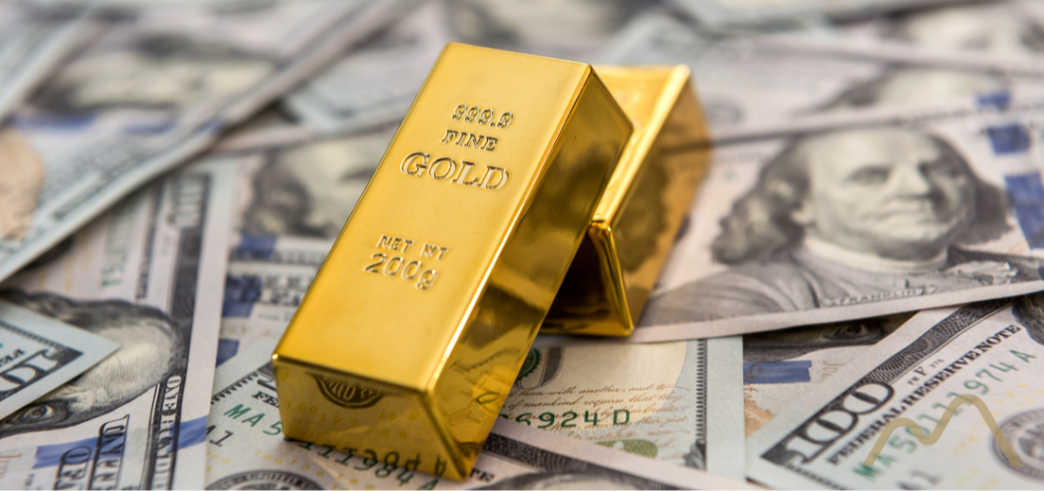
Physical gold has been the ultimate symbol of wealth and financial security for thousands of years. In turbulent economic times, investors worldwide turn to this precious metal en masse. The primary reason for this is the absence of counterparty risk. Physical gold carries no credit risk from a bank or government, making it a safe investment for your accumulated wealth.
However, from a legislative perspective, not every piece of gold is exactly the same. To fully benefit from the financial and fiscal advantages of precious metals, it is important that you invest exclusively in recognized investment gold. What is investment gold exactly, what requirements does the tax authority maintain, and does your gold jewelry also fall under this? In this article, we provide all the answers.
The term 'investment gold' is by no means a commercial marketing slogan devised by dealers. It is an extremely strict, fiscally defined term. Within the European Union, it was decided years ago that physical gold deserves a unique and protected status, provided it is intended purely as a financial investment.
As the Tax Authority officially describes in its conditions, this specific gold is recognized by the government as a full-fledged financial instrument. The underlying reasoning of the legislator is as simple as it is logical: it is intended to treat the trade in physical precious metals fiscally in exactly the same way as the trade in stocks, bonds, or foreign currencies.
Why this legal classification is so important for your returns:
Thanks to its status as investment gold, you invest every euro directly into the intrinsic value of the precious metal itself, without unnecessary friction from the tax authorities.
To prevent any abuse of this attractive tax-free status, the Tax Authority sets hard and unyielding requirements for the purity, weight, and form of the gold. We break these conditions down below into two clear categories: bars and coins.
Do you want to know in detail how the tax authorities handle your precious metal regarding the wealth tax (Box 3)? Dive into our extensive dossiers on VAT on gold and overall taxation regarding precious metals.
When investing in physical gold, you are required to report the value of your holdings in your annual tax return (Box 3 in the Netherlands). The Tax Authority uses a specific reference date (January 1st) for this purpose.
Do you want to know exactly which exchange rate to use and how to correctly calculate the value of your bars and coins? Consult our up-to-date overview of the annual valuation of investment gold for a flawless tax filing.
Physical gold bars represent the most efficient and pure way for many investors to build wealth in precious metals. Because the production costs of a bar are relatively low, you buy very close to the current gold spot price.
However, not just any lump of gold is tax-exempt. To be officially classified and recognized as investment gold by the tax authorities, a gold bar or ingot must meet the following two strict legal conditions:
Within the precious metal market, a persistent myth often prevails among novice investors that anything made of 24 karat pure gold automatically qualifies as tax-free investment gold. This is factually and legally incorrect.
An object made of pure gold falls directly outside the strict definition of investment gold if it does not have the correct standardized form or the correct fiscal status. High purity is therefore a requirement, but not sufficient on its own.
As an illustration, consider a beautiful handmade, decorative golden figurine cast entirely from 24 karat gold. Because this object lacks the standardized form of a bar or wafer and its primary purpose is decoration, the Tax Authority simply does not view it as a financial instrument.
The tax office classifies such a figurine as an art object or a luxury consumer good. Upon purchasing this, you would immediately owe the regular high VAT rate of 21 percent.
By investing exclusively in recognized bars from reliable producers, you avoid these kinds of expensive fiscal misunderstandings and optimize your returns from the very first purchase.
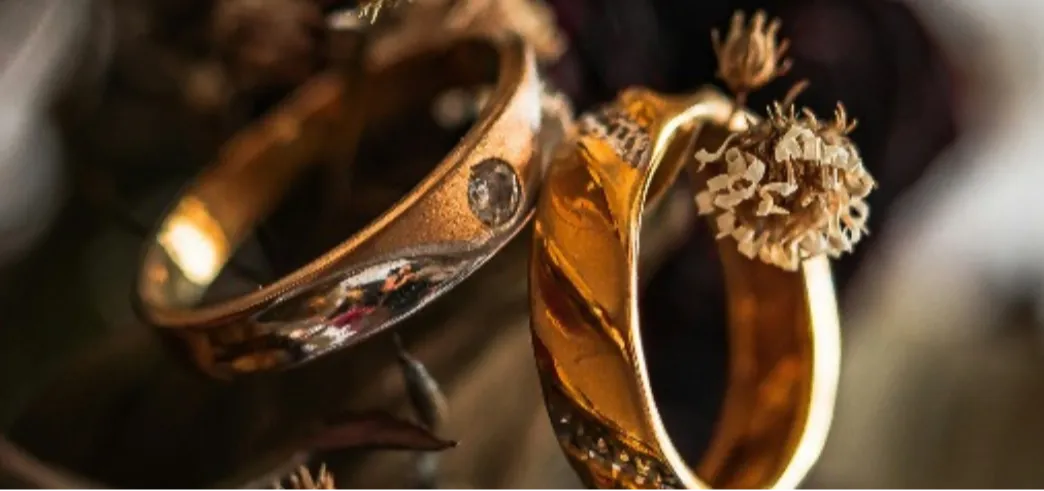
Gold jewelry is not investment gold. It often has a lower purity.
In addition to the efficiency of bars and ingots, a vast number of investors choose the tangible beauty and excellent global liquidity of well-known gold coins. For these coins, however, slightly different but equally strict legal conditions apply to qualify as tax-free investment gold.
The Tax Authority and European regulations set the following four hard requirements for a gold investment coin:
Since it is sometimes very complex for private investors to determine the exact legal status of a specific foreign coin, the government provides transparency. Every year, the European Commission publishes an official and binding list of all gold coins that are legally treated as investment gold within the entire European Union.
The current list for the year 2026 has been published and is immediately in effect. Is a gold coin, such as the South African Krugerrand or the Canadian Maple Leaf, on this overview? Then you have the absolute guarantee that this coin meets all fiscal criteria and that you can purchase it completely free of VAT.
Not every gold coin is automatically tax-free investment gold. Only coins with a minimum purity of 900/1000, minted after 1800, and recognized as legal tender fall under this favorable fiscal arrangement. Consult the official European list for 100% certainty.
This is a frequently asked question and also the source of much confusion among beginning investors. The short and unmistakable answer is no: by law, gold jewelry is absolutely not investment gold.
Although a beautiful gold ring or a heavy chain undoubtedly has high emotional or aesthetic value, from a purely financial standpoint, it is an extremely inefficient investment. This is due to three fundamental reasons, which we clearly list below.
Pure gold (24 karat) is naturally a relatively soft and pliable precious metal. To make a piece of jewelry strong and scratch-resistant enough for daily use, the goldsmith always adds harder metals, such as copper or silver.
As a result, the purity drops almost immediately to, for example, 14 karat (58.5% gold) or 18 karat (75% gold). This is well below the legal requirement of the Tax Authority.
When purchasing gold jewelry, you are definitely not just paying for the weight of the gold. You pay a substantial premium for the labor time, the goldsmith's unique design, the brand name, and the jeweler's profit margin.
In the event of a future sale, you often only receive the current melt value of the gold. All these extra manufacturing costs are immediately and permanently lost at that moment.
Because jewelry simply does not meet the strict purity requirements and the established form for investment gold, it is seen by the tax office as a luxury consumer good. Therefore, you always pay the standard VAT rate of 21% when purchasing jewelry.
To make this fundamental and fiscal difference immediately clear, we compare the two options in the summary table below. This shows at a glance why recognized precious metals are preferred for serious wealth accumulation.
| Feature | Recognized Investment Gold (Bar or Coin) | Regular Gold Jewelry |
|---|---|---|
| Primary Goal | Wealth preservation and investment | Aesthetics and wearing |
| Purity | Very high (min. 90% to 99.99%) | Often lower (58.5% to 75%) |
| VAT Rate | 0% (Exempt from VAT) | 21% (Taxed as consumer good) |
| Premium / Manufacturing Costs | Very low (close to current spot price) | Very high (design, brand, and labor) |
When you invest in investment gold, global tradability is very important. The London Bullion Market Association (LBMA) is the primary regulator of the international precious metals market.
Producers with the LBMA 'Good Delivery' status, such as Umicore and Heraeus, are strictly monitored for purity and responsible sourcing. Do you choose a gold bar from an LBMA-recognized producer? Then you are assured of maximum liquidity and can sell your gold worldwide without problems and without additional analysis costs.
When you decide to convert wealth into investment gold, the strategy behind your purchase is of great importance. A common mistake is investing the entire budget into one large gold bar, for example, of one kilo. Although this results in the lowest production costs in percentage terms, you lose an important advantage: divisibility.
Suppose that in the future you only need a small part of your accumulated capital to cover a financial setback or make a new investment. You cannot cut a one-kilo bar into pieces and sell part of it.
From the perspective of risk diversification and flexibility, it is therefore extremely wise to divide your purchase over several smaller bars (such as 50 or 100 grams gold bars) and common gold coins. This way, you always maintain full control over which part of your wealth you liquidate at any given moment.
When your primary goal is wealth accumulation and the preservation of purchasing power, recognized investment gold is the only logical and fiscally sound choice.
By investing in bars and coins that meet the strict requirements of the Tax Authority, you avoid VAT and keep premiums extremely low. Furthermore, you possess a tangible and independent asset without any counterparty risk.
At The Silver Mountain, we guarantee that all gold bars and gold investment coins in our range possess the official legal status of investment gold. They originate from producers recognized by the LBMA (London Bullion Market Association), ensuring global tradability.
View our current gold range immediately and secure your wealth today with safe and tax-free precious metals.
The Silver Mountain does not provide individual investment advice. This article is intended for informational purposes only. Past performance and described market developments offer no guarantees for the future.
Investment gold is physical gold specifically produced for investment purposes that meets the strict legal requirements of the Tax Authority. It includes standardized gold bars with a minimum purity of 995/1000 and recognized gold coins with a minimum purity of 900/1000.
Within Europe, it is legally established that investment gold must be viewed as a financial instrument for building wealth, comparable to stocks. To avoid fiscally penalizing this specific form of investment, the VAT rate on these gold products is set at zero percent.
No, gold jewelry does not qualify as investment gold. It almost always has a much lower purity (such as 14 or 18 karat) to make the metal harder. Additionally, you pay high manufacturing costs and the standard VAT rate of 21% when purchasing jewelry.
Not automatically. A 24 karat gold product still falls outside the definition of investment gold if it does not have the correct form. A handmade decorative art object of pure gold is seen by the tax office as a consumer good and is taxed with 21% VAT.
To qualify as investment gold, a gold coin must have a purity of at least 900/1000. Furthermore, the coin must have been minted after 1800, function or have functioned as legal tender, and the price may be at most 80% above the actual gold value.
Investors choose physical investment gold because it is a safe haven and a store of value during economic turmoil. The big advantage is the absence of counterparty risk. With physical gold, you are not dependent on the creditworthiness of a bank, government, or financial institution.
Yes, the world-famous South African Krugerrand is on the official EU list for investment gold. The coin has a purity of 22 karat (916.7/1000), is legal tender in South Africa, and was minted well after 1800. Therefore, you purchase this popular coin completely VAT-free.
Rolf van Zanten is the founder and owner of The Silver Mountain, a specialist in physical precious metals since 2008. With nearly twenty years of experience in the precious metals trade, Rolf shares his expertise on investing in gold, silver, and platinum in an accessible and reliable way. His knowledge of the international gold and silver markets helps investors make well-informed decisions. In his role as an expert, he strives to ensure that transparency, security, and trust are at the heart of every purchase.

Be the first to discover the latest products and the latest news about precious metals.



 Nederlands